Calculus A

Posted by Williamsburg Learning on Jan 14, 2022 12:42:39 PM

Why This Class
Your student has learned the basics of counting, addition, multiplication, and so on. They can find the perimeter of a square and the radius of a circle. However, you know life does not always come in perfect squares and circles, with simple mathematical solutions to solve all problems. You want your student to have the skills to meet all of life’s challenges, including the ability to solve complex problems.

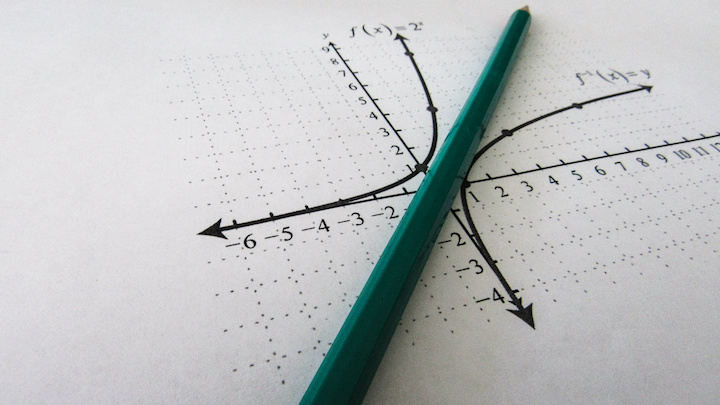
Students in this self-paced course use our math learning platform to refine their reasoning skills through studying and applying the concepts of calculus. They examine instantaneous rates of change, use derivatives and integration, and apply concepts from earlier high school math courses to solve more complex problems than they ever have.

By the end of this course, students gain confidence in solving problems with irregular shapes—and transferring those skills to solve the “irregular shapes” of life in high school and beyond.

Read More

Algebra 2B

Posted by Williamsburg Learning on Jan 14, 2022 12:37:19 PM

Why This Class
To succeed at school and in life, your student needs to hone the skill of abstract thinking: the ability to see beyond the here-and-now and recognize the patterns and connections between ideas. This course helps by training your student in the tools of advanced algebra, extending the fundamentals of arithmetic to abstract scenarios.

Students in this self-paced course use our math learning platform to explore rational, logarithmic, sinusoidal, inverse, and composite functions. They also model real-world situations with statistics. By doing so, they learn lifelong skills including data interpretation and advanced handling of measurements, proportions, and equations. In the process, they prepare for post-secondary math courses or a high school diploma and expand their view of math as a real-world problem-solving tool.

By the end of this course, students gain confidence in the process of applying a concrete set of principles to abstract problems. This new skill prepares them to excel in future math learning—and to think more creatively and dynamically in every area of life.

Read More

Algebra 2A

Posted by Williamsburg Learning on Jan 14, 2022 12:34:01 PM

Why This Class
You want an open door for your student to embark on whatever career path they choose. Understanding advanced algebra is essential for anyone hoping to work in science, engineering, or technology—and it’s an entrance requirement for most college programs. Taking this course helps ensure your student can pursue their purpose without being held back.

Students in this self-paced course leverage their existing math skills to solve problems involving variables instead of numbers. With the help of our math learning platform and math tutors as needed, they learn about exponential functions, radical functions, complex numbers, and logarithms. In the process, students gain skills that will especially prepare them for success in a math-based trade or technical career.

Students emerge from this course with an enhanced ability to notice what changes and what remains constant—both in math and life. They are well-prepared for higher-level math studies and the career path of their choice.

Read More

Algebra 1B

Posted by Williamsburg Learning on Jan 14, 2022 12:29:58 PM

Why This Class
As your student grows towards adulthood, developing the logical thinking skills of algebra will prepare them, among other things, to make wise financial decisions and accurately analyze the news. You want your student to have these skills—and this course helps by elevating their confidence and capacity in algebra.

Students in this self-paced course use our math learning platform to explore the surprising real-life applications of linear inequalities, arithmetic and geometric sequences, and exponential and absolute value functions. With the help of math tutors as needed, students learn to identify rational and irrational expressions and find solutions to real-world problems using factoring.

By the end of this course, students gain a solid foundation in manipulating algebraic expressions. They are prepared to succeed in higher mathematics and excited to use their sharpened critical thinking skills in daily life.

Read More

Algebra 1A

Posted by Williamsburg Learning on Jan 14, 2022 12:03:45 PM

Why This Class
For your student, algebra opens the door to discovering all higher mathematics and strengthens the critical thinking skills you want them to use every day. The earlier they master algebra, the more likely they are to succeed in future math challenges—at school or in life. With that in mind, this course helps your student level-up their algebra skills.

Students in this self-paced course use our math learning platform to learn the structure of mathematical sentences and how to interpret them. They discover variables, solve algebraic equations, and see how graphing can bring numbers and concepts to life. With help from math tutors as needed, students come to recognize the similarities between solving problems in math and the real world. They also study classic math texts to learn about the theories behind the numbers.

Students emerge from this course with the skills to start exploring the world of higher mathematics—and with the confidence and critical thinking skills to succeed in any future educational pursuit.

Read More

Physics B

Posted by Williamsburg Learning on Jan 11, 2022 11:29:32 AM

Why This Class
Your student is naturally intrigued by finding out how things work, and you want to nurture their curiosity. This course helps by introducing them to the mechanics of electricity—and the countless devices that rely on it to power daily life in the 21st century—and expanding their ability to see the world like a physicist.

Mentors in this course guide students on an exploration of energy, work, light, electromagnetic frequencies, sound waves, and electricity. Students also examine the mind-boggling concepts of spacetime, the expanding universe, the uncertainty principle, and elementary particles and forces in nature. Students solve real-life problems as they explore each topic. In the process, they discover the inner workings of simple motors and awaken more than ever to the possibilities of technology.

Students emerge from this course knowing where electricity comes from and how it powers simple machines. They see the relevance of theoretical physics in their daily lives and are excited to keep exploring the principles that make the world work.

Read More

Physics A

Posted by Williamsburg Learning on Jan 11, 2022 11:25:56 AM

Why This Class
As complex as it seems, the physical world runs according to a simple set of natural laws. You want your student to be aware of these rules and how they impact daily life, in everything from transportation to global politics. This course helps by introducing your student to the mind-bending, reality-defining laws of physics.

Mentors in this course guide students to apply advanced math concepts including significant figures, scientific notation, unit conversions, radians, and trigonometry to investigate real-life physics problems. Students then explore questions involving vectors, acceleration, and Newton’s laws of motion. In class discussions and debates, they also dig into the physics behind social issues such as warfare, energy, and nuclear power, strengthening their critical-thinking skills in the process.

By completing this course, students gain an increased awareness of the ever-present influence of physics in their lives. They are more informed about how the world works—and more motivated to use that knowledge to make a positive impact.

Read More

Earth Science B

Posted by Williamsburg Learning on Jan 11, 2022 11:15:48 AM

Why This Class
You see news stories about Earth’s health and natural resources every day, and you want your student to be informed about the factors behind these issues. This course leads your student on a scientific study of energy and agriculture to expand their perspective on the challenges facing Earth—and the choices facing humanity—today.

Mentors in this course guide students to examine two of Earth’s assets: the often-overlooked resource of soil and the much-discussed resource of carbon-based fuels. Students explore and deliberate the processes that, over the course of decades or millions of years, create the dirt to grow our food and the energy to power our homes, cars, and technologies. Students participate in class discussions and debates about climate change, nuclear power, and alternative energy sources.

By the end of this course, students gain a detailed understanding of the challenges facing humanity in the current and future use of Earth’s soil and energy resources. They also appreciate their role in deciding the outcomes of these issues.

Read More

Earth Science A

Posted by Williamsburg Learning on Jan 11, 2022 11:12:11 AM

Why This Class
Earth is the only known habitable planet in the Universe—and as a resident of that planet, you want your student to appreciate their home. This course opens their eyes to the many systems at work on Earth every day and the unique characteristics that make life on Earth possible.

Mentors in this course guide students in a discovery of how scientists believe the universe began and how Earth came to be. They introduce students to the evidence that informs those theories and the questions that remain. From there, students explore the interactions between the Earth, Sun, and Moon and learn how the energy and movements of each create weather patterns. Students also examine natural systems including tectonic plates, earthquakes, and volcanoes to recognize the forces of continuous creation and destruction on their planet.

Students emerge from this course with an awareness of the systems that make Earth habitable, an appreciation for the fragility of those systems, and a desire to learn even more about their home planet.

Read More

Chemistry B

Posted by Williamsburg Learning on Jan 11, 2022 11:08:45 AM

Why This Class
In today’s world, it can be difficult to tell if a scientific claim stems from real facts or pseudoscience—whether it’s a nutritional fad, health cure, or even an environmental study. You want your student to be able to separate truth from fiction, and this course helps by increasing their knowledge of the hard facts of chemistry.

Mentors in this course introduce students to thermochemistry—the heat used in and created by chemical reactions—as well as concepts including the states of matter, the properties of solutions, and chemical equilibrium. Students also explore the waves of the electromagnetic spectrum and the basics of nuclear chemistry. Finally, students complete a summary project that solidifies their understanding of the experimental method and present a thorough analysis of their findings.

Students emerge from this course with an enhanced ability to discuss scientific discoveries intelligently. They use their new knowledge to recognize and avoid pseudoscience and think more independently in all areas of life.

Read More